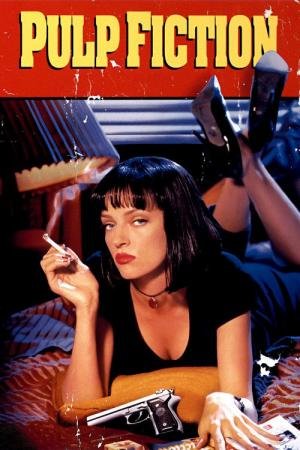
 USA
Country
Watch the trailer before exploring full movie details
Pulp Fiction - Movie Crew Info
"Pulp Fiction" is a stylish and gripping crime film that weaves together several interconnected stories set in Los Angeles. The movie follows the lives of two hitmen, Vincent Vega and Jules Winnfield, who work for a powerful gangster named Marsellus Wallace. Vincent and Jules are tasked with retrieving a mysterious briefcase that belongs to Marsellus, and their journey is filled with tense moments, dark humor, and unexpected twists.
One of the film's most memorable scenes features Vincent taking Marsellus’s wife, Mia, out for an evening while her husband is away. Their night takes a dramatic turn when Mia overdoses on drugs, and Vincent must rush to save her, creating a mix of suspense and comedy. Meanwhile, another storyline focuses on a boxer named Butch Coolidge, who is paid by Marsellus to throw a fight. Instead of losing as planned, Butch decides to double-cross the gangster by winning the match and trying to escape with the money. His attempt to flee leads to a series of dangerous and surprising events, including a tense encounter in a pawn shop.
The film’s narrative is known for its non-linear structure, meaning the scenes are not shown in chronological order. This style keeps viewers engaged as the stories gradually connect and reveal the complex relationships between the characters. Throughout the movie, sharp and witty dialogue adds depth to the characters, making even ordinary conversations captivating. The interplay between humor and violence creates a unique tone that has become iconic in modern cinema.
"Pulp Fiction" explores themes of loyalty, fate, and redemption, showing how the characters’ choices impact their lives in unexpected ways. The film is also famous for its memorable soundtrack, which includes classic rock and roll and soul music, perfectly matching the movie’s cool, retro vibe. Directed by Quentin Tarantino, "Pulp Fiction" stands out for its creative storytelling, strong performances, and bold style.
By blending crime, comedy, and drama, the film offers a fresh take on the gangster genre and has influenced many movies that followed. It invites viewers to dive into a world where danger and humor collide, making it a thrilling and entertaining experience from start to finish. Whether it’s the intense moments, the clever lines, or the unforgettable characters like Jules, Vincent, Mia, and Butch, "Pulp Fiction" remains a powerful and engaging film that continues to captivate audiences around the world.
Pulp Fiction teaches us that life is unpredictable, filled with moments of chance, choice, and consequence. Through intertwined stories, it reveals how ordinary people face moral dilemmas, violence, and redemption. The film’s raw dialogue and dark humor remind us that beneath chaos lies humanity—flawed, vulnerable, yet capable of change. It urges viewers to reflect on fate, forgiveness, and the power of second chances, making us appreciate the complexity of life’s unexpected twists and the value of every decision we make.
Awards
Academy Awards (1995)
Won Best Original Screenplay – Quentin Tarantino, Roger Avary
Golden Globe Awards (1995)
Won Best Screenplay – Quentin Tarantino
BAFTA Awards (1995)
Won Best Original Screenplay – Quentin Tarantino, Roger Avary
Palme d'Or, Cannes Film Festival (1994)
Won Palme d'Or – Quentin Tarantino
Independent Spirit Awards (1995)
Won Best Feature
Won Best Director – Quentin Tarantino
Won Best Screenplay – Quentin Tarantino
"Pulp Fiction" (1994) faced controversies primarily due to its graphic violence, pervasive use of profanity, and depiction of drug use. Critics debated its non-linear narrative and morally ambiguous characters, with some arguing it glamorized crime and violence. The film's frequent racial slurs, especially the N-word, sparked discussions about racial sensitivity and censorship. Some theaters initially hesitated to screen it, concerned about its adult content. Despite this, "Pulp Fiction" received critical acclaim and was influential in independent cinema. Its provocative style and themes led to ongoing debates about the boundaries of artistic expression and the impact of violent media.